
Explore Pamplemousses District:
Sir Seewoosagur Ramgoolam Botanical Garden Pamplemousses

Commonly known as the Pamplemousses Botanical Garden, this iconic site is one of Mauritius’ most visited attractions and the oldest botanical garden in the Southern Hemisphere. Located in Pamplemousses, near Port Louis, the garden spans nearly 37 hectares and is world-famous for its long ponds filled with giant water lilies (Victoria amazonica).
The garden’s roots date back to the 18th century, when the French governor Mahé de La Bourdonnais acquired the Mon Plaisir estate in 1735 and created a vegetable garden to supply the growing settlement of Port Louis and visiting ships. It later gained international recognition under the direction of Pierre Poivre, who developed it into a center for tropical plant acclimatization in the 1760s.
Over time, the garden became one of the most remarkable botanical collections in the tropics, showcasing rare palms, spice trees, and endemic species that reflect Mauritius’ rich natural heritage.
Sugar Adventure
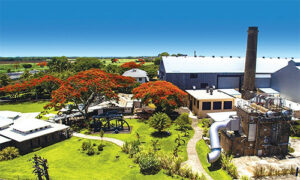
Set within a beautifully restored former sugar factory at Beau Plan, close to the botanical garden, L’Aventure du Sucre offers an engaging journey through the history of sugar in Mauritius. This modern museum traces the entire process—from sugar-cane cultivation to industrial production—while highlighting sugar’s central role in shaping the island’s economy and society.
Sugar cane was first introduced to Mauritius by the Dutch in 1639, though early attempts at cultivation were abandoned. It was only in the mid-18th century, under French administration, that sugar production truly took hold and expanded. Following the abolition of slavery in 1835, the British colonial authorities brought indentured laborers from India, marking one of the most significant migration periods in the island’s history.
From nearly 250 sugar factories in the 19th century, the industry has evolved into a highly modernized sector with just a few state-of-the-art plants today. Beyond sugar production, the industry now contributes to renewable energy generation and other by-products. While Mauritius has diversified its economy, sugar remains a key export, symbolized by the vast sugar-cane fields that still blanket much of the island.
